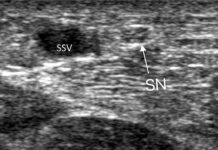
For decades, our field has become increasingly sophisticated in seeing anatomy. Ultrasound images became clearer. Devices became more advanced. Procedures became faster and less invasive. We became better at identifying reflux, measuring diameters, and locating abnormal segments.
But I still feel that something important remains incomplete.
Two patients can have very similar ultrasound findings, yet completely different symptoms.
Some patients improve dramatically after treatment, while others eventually develop recurrence despite technically successful procedures.
Sometimes anatomy appears straightforward, but physiology behaves differently.
Perhaps the problem is not that we do not see enough structures. Perhaps we still do not fully understand flow.
Veins are not simply tubes. They are dynamic systems. Flow changes with posture,breathing, walking and compensatory mechanisms that can differ from one patient to another.
For years, understanding these patterns has depended heavily on experience and human interpretation. Experienced physicians often recognize a hemodynamic pattern before they can fully explain it.
We learn through years of observation, repeated examinations, successes, failures, and accumulated intuition.
But recently I have started asking a different question:
What happens when artificial intelligence begins to understand flow?
Could future systems learn from thousands—or even millions—of hemodynamic maps?
Could ultrasound evolve from an imaging tool into an intelligent hemodynamic interpreter?
Could AI identify patterns that physicians may not easily recognize?
Could future treatment planning become a collaboration between human physiological understanding and computational intelligence?
I do not believe AI will replace physicians.
In fact, I suspect the opposite may happen.
As AI becomes increasingly powerful, human understanding of physiology may become more important rather than less.
AI may process enormous amounts of information, but physicians still need to ask meaningful questions.
Perhaps hemodynamics provides exactly that language.
These thoughts have gradually evolved into many discussions within our team at Asian Venous Academy.
As an early preview, we are currently preparing the 2026 Asian Venous Summit, planned for mid-October 2026 in Hong Kong.
This meeting is unlikely to resemble many traditional conferences.
Rather than attempting to cover every topic in venous medicine, we are considering a highly focused theme:
Hemodynamics, Venous Insufficiency, and Artificial Intelligence
We hope to create a meeting that goes beyond reviewing existing technologies and instead explores larger questions:
- How will AI reshape hemodynamic diagnosis?
- Can future systems move us from static anatomy toward dynamic understanding?
- How will treatment planning evolve?
- What might future venous medicine look like?
- How should physicians prepare for this transition?
We are also planning a practical half-day workshop dedicated to the fundamentals of hemodynamic assessment and examination techniques.
Perhaps the most interesting discussions have not yet been discovered. Sometimes it begins when people start asking different questions.
Hong Kong.
October 2026.
Maybe this is where the next conversation starts.