The Hemodynamic Turning Point in Varicose Vein Treatment
During the Lunar New Year of 2026, I spent several quiet days in Hong Kong. For the first time in quite a while, I stepped away from the steady rhythm of clinics and operating rooms.
It offered something physicians rarely have enough of: time to reflect.
Without fully realizing it, I have now spent more than three decades studying and treating varicose veins. Over the years, my colleagues and I have seen over 100,000 patients with venous disease and treated more than 20,000 cases.
Yet what led me to begin writing this book was not the scale of that experience.
It was the growing realization that something important has been quietly changing in the field of venous medicine. Much of this change lives only in conversations between physicians, in the accumulated experience of clinics and operating rooms. It is shared informally, discussed at conferences, debated among colleagues—but rarely captured as a coherent narrative.
If it is not written down, it risks remaining invisible to history.
That realization led me to begin writing a book titled The Return of the Veins, to be published by the Asian Venous Academy.
This is not a book meant to list procedures or repeat existing educational material about varicose veins. What interests me more is something deeper: we may be witnessing a subtle but important turning point in the way medicine understands venous disease.
Living Upright
Human beings are upright creatures.
This simple biological fact shaped our civilization. But it also created one of the most remarkable physiological challenges in the human body.
Blood returning from the feet to the heart must travel against gravity. The distance is long, the pressure gradients delicate, and the task constant throughout life.
To accomplish this, the venous system evolved an elegant solution: valves, muscle pumps, and the coordinated interaction between superficial and deep veins. Together they form a sophisticated yet silent circulatory architecture.
Varicose veins emerge precisely at the fragile boundary of this system.
The Surgical Tradition
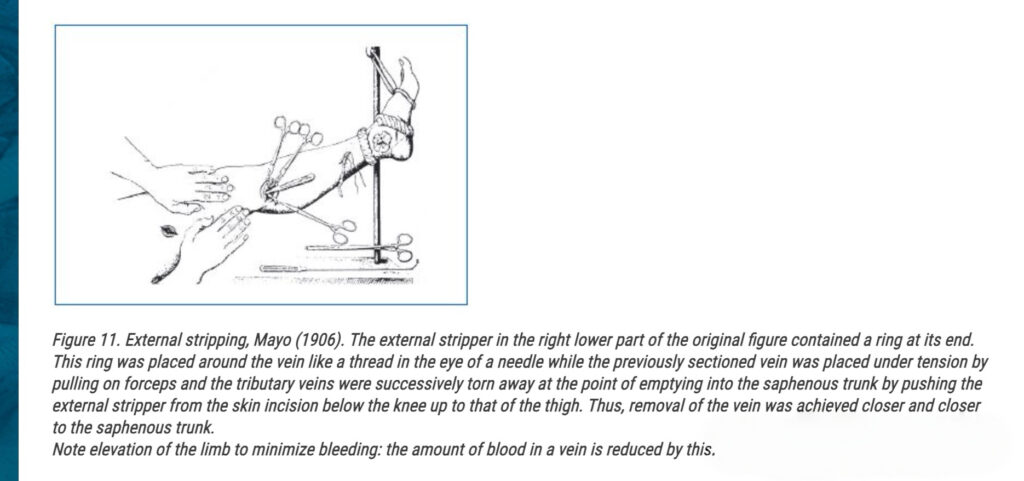
For centuries, medicine approached varicose veins through a straightforward surgical instinct.
When a vein becomes dilated, tortuous, and visible beneath the skin, it is labeled abnormal. The logical response has therefore been to eliminate it.
Across different eras, physicians developed different ways of doing so: ligation, stripping, sclerotherapy, endovenous ablation, and closure techniques. Each approach reflected the best understanding and technology available at the time, and many of them helped countless patients.
Medicine, however, is never a final destination. It is always an evolving attempt to understand the human body more accurately.
In every era, we simply try to answer the most pressing questions with the tools we have.
A Different Question
Today, a different question is beginning to emerge.
Is varicose vein disease truly the result of a defective vein that must be removed?
Or is it more fundamentally the consequence of altered venous return and disturbed hemodynamics?
When we shift our attention from which vein should disappear to how blood actually flows, the entire problem begins to look different.
This shift is not merely the adoption of a new technique. It represents a deeper reconsideration of the venous system itself.
Treatment strategies are gradually moving away from a philosophy of destruction toward a renewed respect for venous structure, physiological function, and the dynamics of circulation.
The Meaning of “Return”
This is the meaning behind the title The Return of the Veins.
It does not refer to bringing veins back.
Rather, it suggests a return to something more fundamental:
a return to the physiology of blood flow, to the architecture of venous circulation, and ultimately to the original goal of medicine—maximizing patient benefit while preserving the natural logic of the body whenever possible.
In that sense, the book is not about promoting a particular technique. It is about tracing how medical understanding evolves over time.
A Turning Point
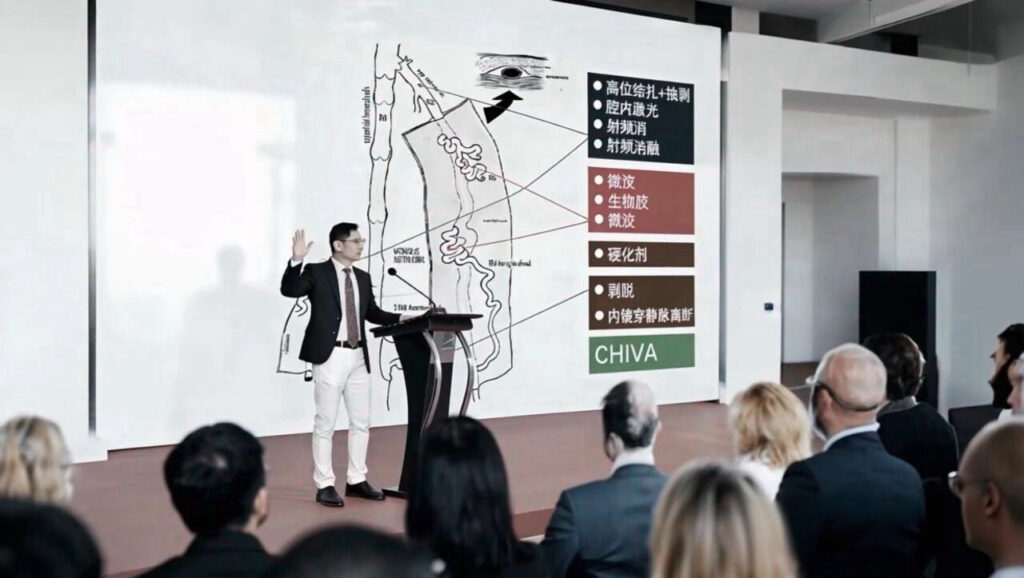
What I hope to write is something close to a short intellectual history of varicose vein treatment.
Not a catalogue of procedures, but a story of shifting perspectives:
from the era of removal,
to the era of closure,
and now toward an era increasingly defined by hemodynamic understanding and vein preservation.
This change may appear subtle today. But in retrospect, it may represent one of the most important conceptual shifts in modern venous medicine.
Writing the Story Forward
The Return of the Veins is only beginning.
In the months and years ahead, I plan to write this book gradually—chapter by chapter—documenting the ideas, debates, and clinical insights that have shaped this evolving understanding.
Because sometimes the most meaningful changes in medicine do not arrive as dramatic revolutions.
They emerge quietly, as physicians begin to see the same problem through a different lens.
And occasionally, those quiet shifts mark the beginning of a new chapter in medical history.